Reference Checks Are Broken. Here's the Candidate-Led Alternative.
The recruiter-led reference check is a relic. The candidate-led model does what it was supposed to do — without the delay, the bias, or the dead ends.
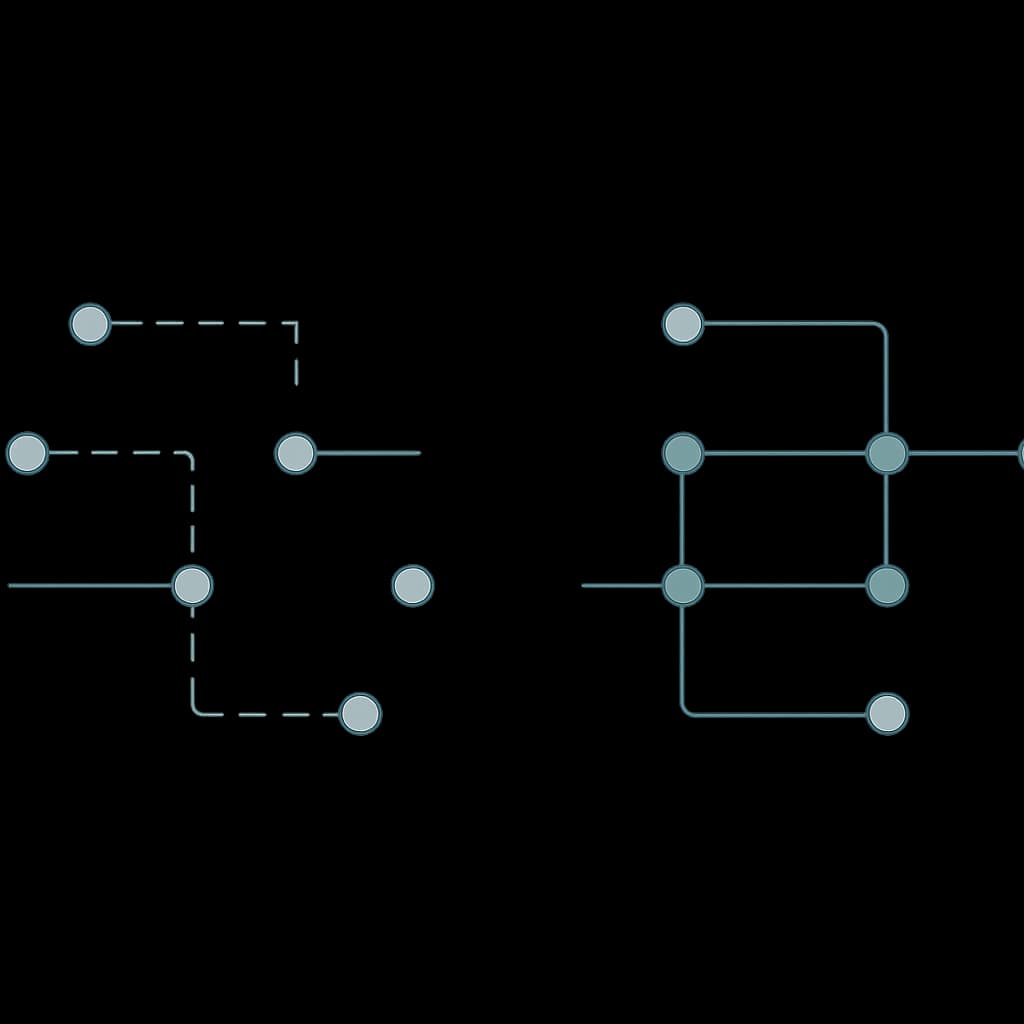
What reference checks were supposed to do
The original logic was sound. You're about to hire someone based entirely on claims they made about themselves. Before you commit, you want to talk to someone who was actually there — someone who saw how they worked, what they contributed, how they handled pressure.
So you call their manager. The manager tells you whether the candidate's account of their tenure is accurate. You get a calibrated outside perspective before the offer goes out. If something important doesn't add up, you find out before it costs you.
That's it. The mechanism was simple: verify claims through people with first-hand knowledge, before the hire. Nothing complicated. Nothing proprietary. Just a structured conversation with the right person.
The problem isn't the idea. The idea is good. What happened is that everything around it changed while the process stayed the same.
Why they stopped working
Legal caution eliminated the signal
At some point in the last fifteen years, employment lawyers at large companies issued the same quiet directive: when someone calls to check a reference, confirm dates and title only. Don't say anything that could be construed as a performance judgment, a character assessment, or grounds for a later lawsuit.
This wasn't malicious — it was rational. Companies that gave candid negative references got sued. Companies that gave candid positive references occasionally found themselves defending hiring decisions that went wrong downstream. The safest move was to say nothing useful, and the policy spread.
The result: the recruiter-led reference call now reaches HR and gets three facts: start date, end date, job title. That's not verification of claims — it's confirmation of existence. The signal the process was built to deliver is gone.
Recruiter time made it optional in practice
Reference checks take time — not just the call itself, but the coordination. Chasing down contact information, scheduling across time zones, waiting for callbacks, writing up notes. On a hiring team triaging 80 applications for a role, this is work that falls to the bottom of the queue.
From hiring teams we've worked with, reference checks increasingly happen late — after a verbal offer has essentially been made — or not at all for roles below director level. The process that was supposed to be a gate has become a formality, and everyone in the industry knows it.
Candidates have no visibility into what was said
This is the asymmetry that rarely gets discussed. In the traditional model, the recruiter calls a reference, the reference says something, and the candidate never learns what it was. If a former manager gave a lukewarm account, or misremembered a project, or was having a bad day — the candidate has no way to know and no way to respond.
We've seen candidates lose offers because of reference calls where the substance of what was said was simply inaccurate. The candidate wasn't lying; the reference was imprecise. But there's no mechanism to surface that discrepancy, no right of reply, no transparency at all.
What "candidate-led" actually means
The candidate-led model flips the architecture, not the purpose. The purpose stays the same: get confirmation from people who were there, before the hire.
What changes is who initiates, and what the result looks like.
In a candidate-led process, the candidate identifies the people who can confirm specific claims — a former manager for a leadership role, a client for a consulting engagement, a peer for a collaborative project. The candidate asks them to confirm that specific claim in writing. The confirmation is made public, attached directly to the claim it supports.
By the time a recruiter sees the profile, the verification is already done. The recruiter isn't calling anyone. They're reading a record: this person claims X, and this named individual with this relationship to the work confirmed X. The reader can see who said it, what their relationship was, and what specifically they confirmed.
The confirmation is visible. That's the non-negotiable difference. Not locked in a file somewhere. Not hidden in a call summary. Visible, attached to the claim, readable by anyone who looks at the profile.
The model side by side
| Traditional (recruiter-led) | Backdoor (ex-colleague gossip) | Candidate-led (visible) | |
|---|---|---|---|
| Who initiates? | Recruiter, late in process | Recruiter, via personal network | Candidate, before the process begins |
| Who sees the response? | Recruiter only — not the candidate | Recruiter only — not the candidate | Everyone — confirmation is public |
| Time to signal | 1–3 weeks (scheduling, callbacks) | Hours, if the connection is warm | 24–48 hours |
| Can candidate correct errors? | No — candidate never learns what was said | No — candidate doesn't know this happened | Yes — candidate sees every confirmation and can address gaps |
| Bias risk | High — depends on who picks up the phone and what mood they're in | Very high — zero accountability, no record, pure impression | Low — relationship is disclosed, confirmation is readable, weight is calibratable |
The bias objection — and why it's misframed
The instinctive reaction to candidate-led verification is: "But candidates will just pick the people who like them. That's not objective."
It's a reasonable intuition. It's also wrong, and it's worth explaining exactly why.
In the traditional model, candidates also pick their references. They've always picked their references. Nobody submits the contact details of a manager they had a bad relationship with. The "objectivity" of recruiter-led checks comes entirely from the recruiter asking the questions — not from the candidate having no input on who they suggest.
In the candidate-led model, the confirmation is visible. That changes everything. When you read a confirmation and you can see that the person who gave it is described as "a close colleague and friend," you weight it accordingly. When you see that the confirmation is from a direct manager and the language is precise and substantive — "she led the integration project from kick-off to delivery, managing the external vendor relationship without escalation" — you weight that very differently.
A warm, vague endorsement from someone with an obvious personal relationship reads exactly as it is: a warm, vague endorsement. It's not zero signal. It's just appropriately discounted signal. The reader has everything they need to calibrate.
Compare that to the traditional model, where the recruiter talks to whoever picks up the phone at a company HR line and the candidate never knows what signal, if any, came through. We'd argue the candidate-led model has substantially less uncalibrated bias — not more.
How it changes the hiring process
Give your professional identity its own address.
Create your independent professional profile — no feed, no ranking, no platform lock-in.
Start your profileThree concrete changes that hiring teams describe after shifting to candidate-led verification as their top-of-funnel expectation.
Time-to-signal drops from weeks to 48 hours. When verification is already done before the application arrives, there's no reference-chasing phase. You read the profile, you see the confirmations, you make the shortlist call. From hiring teams we've worked with, this alone takes one to two weeks out of the average process timeline for roles where candidate-led profiles are accepted.
Shortlist quality improves without additional screening. Candidates who submit profiles with no confirmations, thin confirmations, or confirmations only from obvious personal connections self-signal lower confidence in their claims. You don't need a separate screening step to surface this — it's visible in the profile itself. The shortlist that emerges tends to be more reliably accurate without the recruiter spending more time.
Interview time shifts toward what the profile doesn't cover. When you already know a candidate's role history is confirmed and the key claims check out, you're not spending the first twenty minutes of an interview doing soft verification. You can go deeper on judgment, on approach, on the things no written confirmation can tell you. From hiring managers we've spoken with, interviews feel more productive because the housekeeping is already done.
Objections we've heard
"Can't you just get all your friends to lie for you?"
They can write a confirmation, yes. But they're putting their professional identity behind the claim — their name, their relationship, their association with the statement. That's a non-trivial ask. And a recruiter reading three confirmations where the language is suspiciously similar and the relationship descriptions are all "close friend and former colleague" will notice. The signal quality of a fabricated confirmation is visible in the text. This is a less serious problem than fabricating an entire work history on a traditional CV, which requires much less effort and is much harder to catch.
"What about sensitive context — layoffs, performance issues, firings?"
A candidate-led model isn't a confession booth. The candidate isn't required to surface confirmation from everyone involved in a difficult departure. They're confirming the work they did, not the circumstances under which they left. A former peer who worked alongside someone for three years can confirm the substance of that work regardless of how the employment ended. Sensitive context still comes up in interviews — and it should — but that's a separate conversation from whether the work was real.
"What if I don't have 'good' references — what if I'm early-career, or I've been freelance, or my managers have all moved on?"
This is where we think the candidate-led model is actually more inclusive than the traditional one. You don't need a senior person. You need someone with first-hand knowledge. A client you delivered a project for. A peer who shipped something with you. A stakeholder who saw the outcome of your work. We explored this in more depth in our piece on proving work experience without calling your old boss — the short version is that the people who know your work are almost never the company, and almost always the individuals who were in the room with you.
The new default
Candidate-led verification isn't a replacement for every kind of reference conversation. If a hiring team wants to have a frank, unstructured discussion with someone who worked with a candidate — the kind of conversation that doesn't reduce to a written confirmation — that will always have a place. But that's a late-stage conversation for a specific purpose. It's not the default gate.
The default gate — the check that happens on every candidate, early in the process, to establish that claims are real — that's where the model has already shifted. The recruiter-led call to HR was never delivering the signal it promised. It was slow, inconsistent, legally neutered, and invisible to the candidate. It deserved to be replaced.
The candidate-led model does what the original process was supposed to do. Named people confirm specific claims, in writing, visibly, before the recruiter has to ask anyone. That's not a workaround. That's the design.
If you want to understand what this looks like in practice — what a profile with candidate-led verification actually contains and why recruiters are starting to treat it as the baseline — our piece on verifiable CVs covers the mechanics clearly. And if you're concerned about the fraud angle — what unverified CVs look like and why the traditional process can't catch the patterns — the anatomy of CV fraud is the companion read.
The process that was broken wasn't the idea of verification. It was the infrastructure around it. That infrastructure now has a better version.