What Is a Verifiable CV? (And Why 2026 Is the Year It Becomes Table Stakes)
A verifiable CV links every claim to someone who can confirm it — and in 2026 it stops being a nice-to-have.
The one-line definition
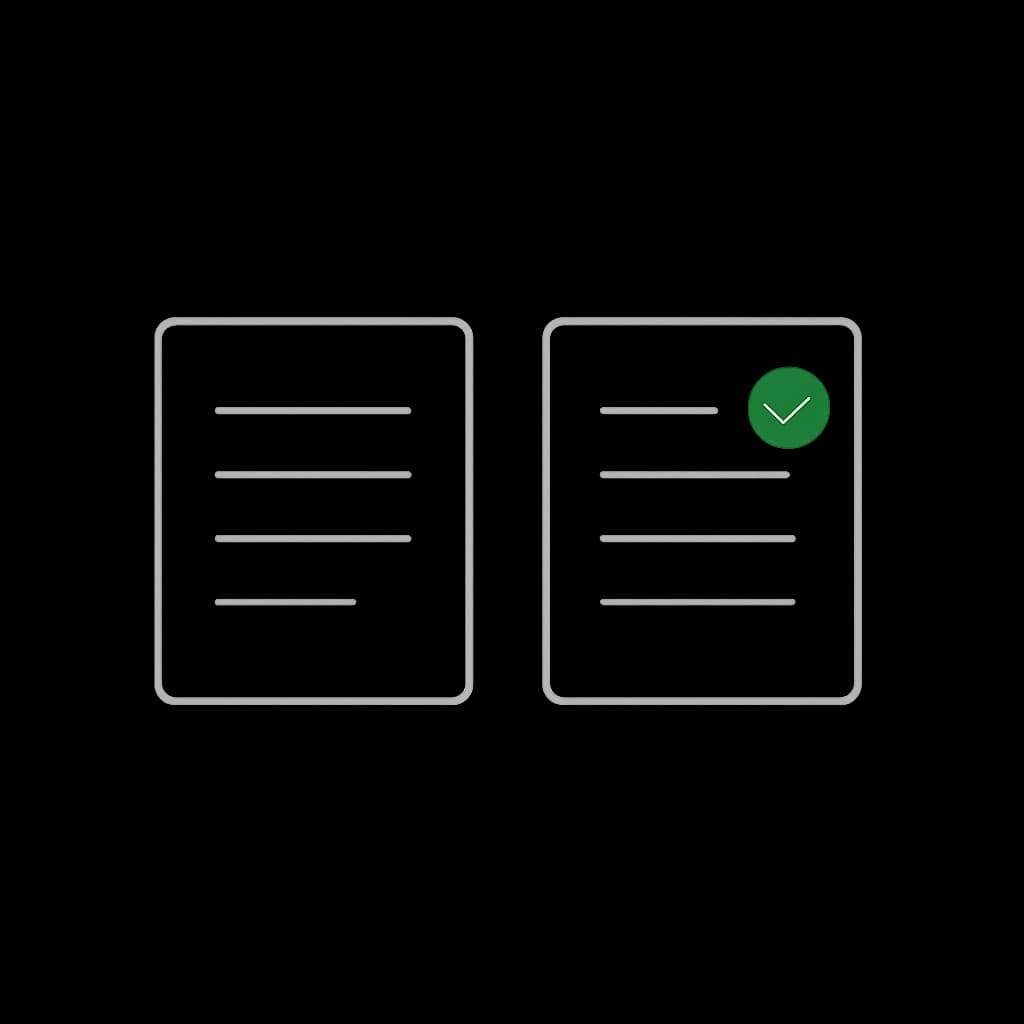
A verifiable CV is a CV where every meaningful claim — a role, a project, a skill, an outcome — is independently confirmed by a real person with first-hand knowledge of the work.
Not the company. Not HR. The individual who was there.
That's the whole concept. Everything else in this post is why it matters.
Why 2026 matters
Three things changed in the last 18 months, and they stacked.
First, generative AI made it trivial to produce a polished, believable CV. Not a fabricated one — a polished one. Real roles, real companies, stretched wording. The line between "accurate self-promotion" and "subtle embellishment" got blurrier, and recruiters now have to assume every CV has been through at least one LLM pass.
Second, reference-check volume collapsed. HR teams can't legally say much about former employees anymore — most confirm dates and titles and nothing else. So the traditional verification pipeline (recruiter calls HR) produces almost no signal.
Third, the people who do know how you work — your former manager, the teammate who shipped the project with you, the client you delivered for — are exactly who recruiters can't systematically reach. They're scattered across ex-employers, LinkedIn DMs, and the gaps in your own address book.
What "verification" actually means on a CV
It's not a logo. It's not a LinkedIn endorsement. It's not a blue checkmark.
On a verifiable CV, each claim has an attached source. Something like:
- Role at ACME Corp, 2022–2024 — confirmed by Sarah Chen, Director of Engineering (direct manager)
- Launched payments platform, $2M ARR — confirmed by Miguel Ruiz, VP Finance (stakeholder on the project)
- Led team of 6 engineers — confirmed by two of those engineers, who named themselves publicly
The reader can see:
- Who confirmed the claim
- Their relationship to the work (manager, peer, client, stakeholder)
- That the confirmation was independent (not self-service)
That's it. No technology per se is mandatory. What's mandatory is that the reader doesn't have to take your word for the claim.
What doesn't count as verification
Three things that look like verification but aren't:
- LinkedIn endorsements. Anyone can endorse you. The system is gameable and everyone knows it.
- Recommendation letters written by you and signed by your manager. Still self-authored, even if a real person signed.
- Company-attested employment. "Yes, she worked here from 2022–2024" confirms dates, not work. HR policy prevents anything deeper.
None of these are bad. They're just not what recruiters are looking for in 2026.
The three-column test
Here's a fast way to evaluate whether any CV is actually verifiable.
| Traditional CV | LinkedIn profile | Verifiable CV | |
|---|---|---|---|
| Who wrote the claim? | You | You | You |
| Who confirmed it? | Nobody (until references are called) | Connections (via endorsements) + employer (confirms role) | Named individuals with first-hand knowledge |
| How is the confirmation visible? | Invisible — assumed | Endorsements (weak signal) | Directly on the CV, per claim |
Give your professional identity its own address.
Create your independent professional profile — no feed, no ranking, no platform lock-in.
Start your profileWhy this becomes table stakes in 2026
We've been here before with resumes. PDF resumes replaced paper because recruiters could forward them. LinkedIn profiles supplemented PDFs because they stayed updated. Now verifiable CVs supplement LinkedIn profiles because they're the only layer that survives AI fraud.
Hiring teams at mid-sized companies are already triaging: if a candidate's claims can't be independently confirmed within 48 hours, the candidate is deprioritized. That isn't new policy — it's just what happens when inboxes fill up and AI-polished applications flood the top of funnel.
If you have a verifiable CV, you're in the fast lane by default. If you don't, you're waiting on HR callbacks that may never come.
What to do about it
If you want a verifiable CV by Monday, the pragmatic path is:
List the claims that matter most
Not your whole career — the three or four roles or projects that a hiring manager would actually ask about. Verification quality beats verification volume.Identify one real person per claim
Someone who was there, has first-hand knowledge, and would confirm the claim if asked. Former managers, former peers, former clients.Ask them directly
The ask is small: "Would you confirm this one specific claim on my profile?" — not a recommendation letter, not a reference call, just a confirmation.Make the confirmation visible
The confirmation should live with the claim. A reader should be able to see it without emailing anyone. That's the whole unlock.
The last step is the hardest without infrastructure — and it's why we built upstand.work. One page per person, one confirmation per claim, visible to anyone with the link. But the concept applies regardless of where your CV lives.
The frame shift
The old question was: what have you done? The new question is: who says so?
Get ahead of it now, before your competition does.